
Our work
Selected Cases
We are proud of the solutions we have crafted with care for our clients. Below is a selection of our collaborations, and a look at what becomes possible when data is put to work.

Idura · B2B SaaS
A structured data foundation for measuring digital performance
Idura is a Copenhagen-based B2B SaaS company providing electronic identity infrastructure to businesses across the Nordics. As an official MitID broker and eID integration partner, Idura sits at the centre of how hundreds of businesses authenticate their users and handle digital signatures.
Read the case
Problem area
Idura had a clear commercial framework for its digital performance, but no reliable way to measure against it. The data was split between Plausible, which tracks how people find and move through their website, and HubSpot, where leads and conversions live. The two shared no logic and no agreed KPI definitions, so the same question could produce different answers depending on who pulled the numbers and how. Connecting traffic to conversions meant combining exports by hand, a process that was slow, manual and never quite precise enough to act on.
Solution
To replace the manual exports and lay the groundwork for Idura’s wider data capabilities, we built a central data platform on Snowflake that can be extended as needs grow. The first automated pipelines pull continuously from Plausible and HubSpot. Raw data is modelled into analytics-ready tables, and every KPI is defined once in a semantic layer that everything else draws on. A governed Tableau environment tracks MarCom performance from first visit to conversion. For questions that fall outside KPI frameworks, such as how the blog performs or where to prioritise content efforts, the team can ask an AI agent in plain language. The agent translates each question into SQL and runs it against the semantic layer, so its answers come from the same data and the same definitions as the reporting layer. With both in place, Idura can follow its core KPIs week by week and still dig into new questions the moment they arise.
Impact
Idura now works from one transparent set of numbers. Time once spent pulling and reconciling data goes into acting on them, and because every KPI is defined once, results mean the same thing to everyone, including teams outside MarCom. With the agent, questions that used to require an ad hoc analysis or a new report can be answered on the spot, so marketing priorities rest on data rather than assumptions. The conversation has thereby moved from whose numbers are right to what to do about them.
“Working with Marie, Theresa and Sara is just the way we like to work ourselves: curious, on point, informal, and with a short distance from talk to action (all written communication happens via Slack).
AILO understands us and delivers high quality that creates results here and now, while insisting on enabling us to develop the setup further on our own, so we can get the insights we need without having to start new large projects from scratch.
We’re in good hands with AILO. Highly recommended.”
– Katrine Mølgaard Thielke, VP Marketing & Communication, and Martin Broberg, Webmaster, Idura

Madklubben · Hospitality
Connecting systems from 40+ restaurants to a self-running data platform
Madklubben operates more than 40 restaurants across Denmark and is woven into the fabric of Danish dining culture. The group spans a wide range of concepts and price points, from casual neighbourhood restaurants to more considered dining experiences – each running at its own rhythm, but all held together by a consistent standard and a guest base that keeps coming back. Upholding that standard across the full portfolio depends, in no small part, on having reliable access to operational data.
Read the case
Problem area
A portfolio of this size runs on a large digital infrastructure: point-of-sale, booking, workforce management, marketing and delivery platforms, each generating data around the clock. But every system is built to run its own part of the operation, not to connect with the others. And the questions that matter most often sit between them: how staffing costs track against sales, which campaigns actually fill tables, how often guests return, where they return to and what they spend – none of them can be answered from a single system alone. Madklubben needed a centralised data platform that could bring every system together and answer those questions across them, quickly and transparently.
Solution
Our engagement started by building the connections. All core operational systems now feed a central data platform in Snowflake, orchestrated on Azure, with automated daily ingestion and no manual handling. Data from each source is cleaned, modelled and aligned unattended into one consistent layer, a single source of truth for the whole organisation. On top of it sits a governed reporting environment in Tableau, covering sales, bookings, workforce costs and a range of cross-source views, built for every level from group leadership to the individual restaurant. The architecture is modular by design and built to carry what comes next, so the infrastructure can follow and scale in step with the business.
Impact
Madklubben now runs on one version of the truth. Before doors open each morning, all restaurant managers know exactly how yesterday went, so issues are caught when they happen, not at month-end. Leadership sees the full portfolio side by side, and the questions that once fell between systems are now part of the daily conversation. Data has gone from something the organisation chases to something it runs on.
“The collaboration with AILO has been highly valuable to us, and we look forward to keep building on it. The team are both strategic and executing sparring partners, with a strong understanding of our complex data structure and, most importantly, how it connects to the business.”
– Morten Løwenstein, Head of Marketing & Digital, Madklubben
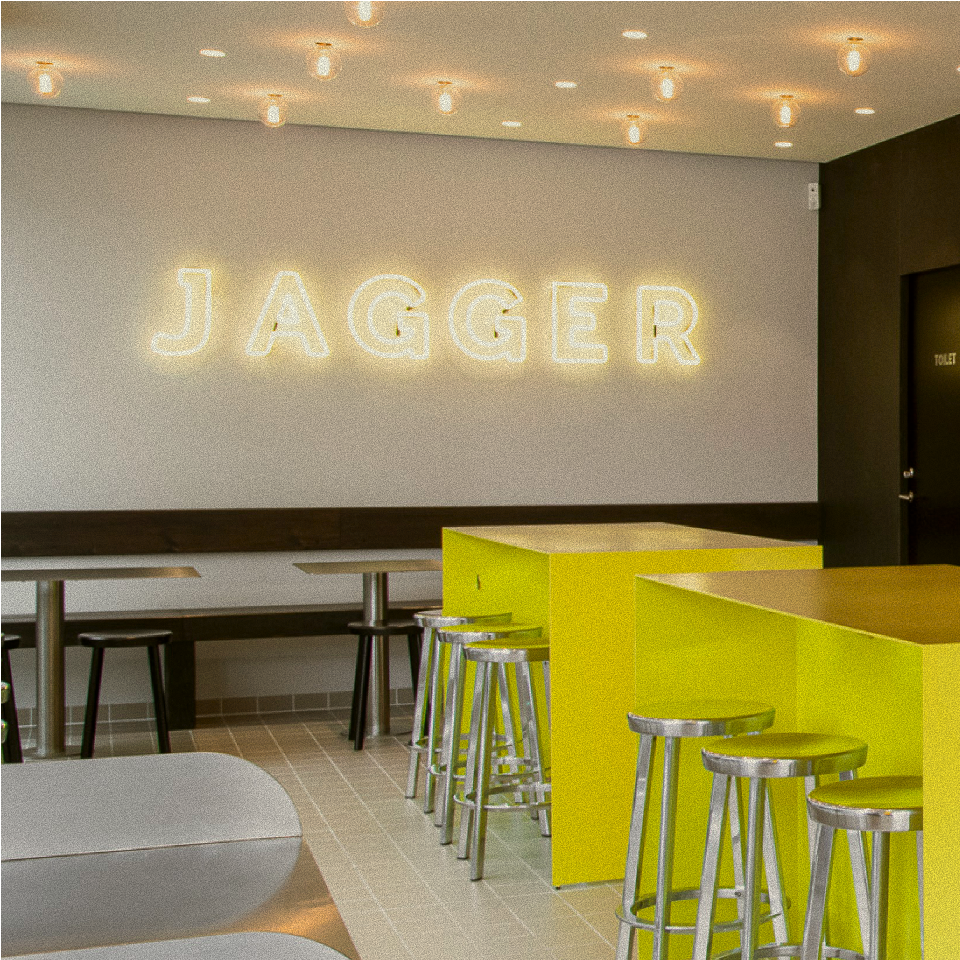
Buzz CPH · Hospitality
One performance framework for three concepts and 30+ venues
Buzz CPH is the group behind three of Copenhagen’s most frequented fast-casual concepts: Jagger, Otto and Ritta. Starting from a single burger restaurant on Istedgade in 2016, the group has grown to more than 30 locations across the city. The concepts are distinct in character – burgers, Neapolitan pizzas and South Asian curries – but share the same uncompromising approach to quality and a loyal, daily following across the city.
Read the case
Problem area
Fast-casual runs at a different pace. Guest flows are quick, takeaway volumes are high, and data is generated almost constantly: sales, delivery platform statistics, daily cleanliness checks, guest ratings and feedback, employee satisfaction and complaint volumes. Each lived in its own system and told only part of the story. A venue could post strong sales while its ratings slipped, or pass every cleanliness check while staff satisfaction dropped, and no one would see the full picture. A well-run venue shows up across all areas at once, and Buzz CPH needed a solid data foundation built around exactly that idea.
Solution
Our engagement began with consolidating all core sources into one shared platform on BigQuery, with Airbyte handling ingestion and dbt managing the transformation layer. The stack was chosen together with CTO Emma Arfelt for its performance, cost profile and fit with Buzz CPH’s existing Google environment. On top of it sits a performance framework and interface that brings every source into one view: each business area has its own defined set of KPIs, and a venue’s overall performance emerges from how all areas perform together, not from any single number.
Impact
Today, Buzz CPH has one definition of a well-run venue, and every location is measured against it. A dip in ratings no longer hides behind strong sales. It shows up in the same view, so issues are addressed before they become patterns. Front of house and kitchen share a common language for what good execution looks like, and every new venue opens into a framework that already defines it. Consistency is no longer a matter of instinct but rather built directly into the system.
“AILO is an amazing team with high energy and badass skills. From the first day they felt as part of the team, and were very energetic and creative in solving our problems. Every workshop was carefully planned, and they made it easy to decide to keep them aboard. I’ll recommend the team to anyone.”
– Emma Arfelt, CTO, Buzz CPH
“Together with the AILO team, we developed a KPI system focused on creating a shared language between front of house and kitchen. Throughout the process, we found AILO highly professional and very pleasant to work with. The final system turned out sharp and well thought through. A clear recommendation from us.”
– Oliver Morgensen, COO, Buzz CPH

CCN Denmark · Insurance claims
Automating monthly claims fee invoicing
Claims Corporation Network Denmark is part of Claims Corporation Network (CCN), a third-party administrator handling insurance claims on behalf of insurers, brokers and fleet operators across Europe. In Denmark, CCN manages claims for a broad portfolio of clients, including public-sector organisations.
Read the case
Problem area
CCN invoices its clients monthly, based on the claims handled for each of them. The underlying data arrives as claims bordereaux exported from several claims systems, each with its own structure, field conventions and data quality issues. Producing invoice-ready figures meant cleaning, filtering and aggregating the bordereaux manually, client by client, a task that took one to two working days every month. The process was repetitive, hard to audit and relied on a few employees who knew how each source had to be handled. CCN wanted to cut that time down and have a process that would run the same way every month, regardless of who was running it.
Solution
Our engagement focused on turning a manual, person-dependent process into a rules-based workflow that anyone on the team could run. The work centred on one of CCN’s core claims systems, which holds bordereaux for several of its clients. Together with the team, we documented the manual preparation step by step and translated it into explicit business rules, including the exceptions and corrections that had never been written down. Those rules became the transformation logic of an automated workflow in Excel Power Query, built where the team already works, so no new tools or licences were needed. Each month, CCN loads the raw bordereau, and the workflow standardises the data, applies the filtering rules, aggregates claims per client and calculates month-over-month changes. The output is a claims count table for invoicing and a claims detail table attached to each invoice.
Impact
For the clients covered, the monthly invoicing basis that used to take one to two working days is now produced in around ten seconds by loading a single file into the workflow. Cleaning and aggregation run on the same rules every month, so the output is consistent, reproducible and ready to attach to the invoice. The business logic lives in the workflow itself rather than with individual employees, which keeps the process running when people are away and makes it straightforward to extend to CCN’s other claims systems.